Discolored Bus Bar: Normal Aging or Safety Hazard?
Wondering if the discoloration on your electrical panel’s bus bar is normal aging or a real fire hazard? Here’s how pros tell the difference during an inspection.
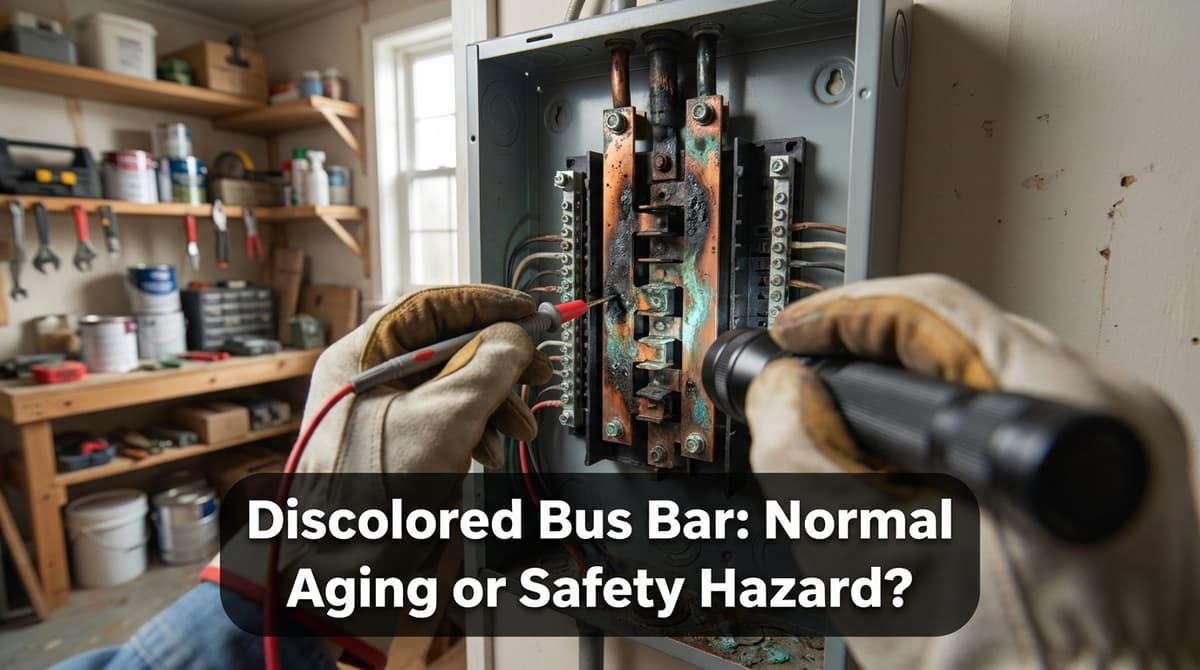
When a Home Inspector Flags a “Scary” Bus Bar
We recently got a call from a homeowner — let’s call him Dave — who was in the middle of a home inspection. The inspector had opened his main electrical panel, taken one look at the bus bar, and immediately flagged it for “discoloration.”
Dave told us, “They’re all freaked out about it, but I think it’s just normal signs of aging. Now they want an electrician to say it’s okay.” He wasn’t sure if this was a real safety hazard or just something that looked bad on paper.
That’s a common situation, especially during a sale or refinance. So let’s walk through what we look for when we inspect a discolored bus bar, and how you can tell the difference between normal aging and a serious electrical problem.
Quick Refresher: What Is the Bus Bar in Your Panel?
Inside your electrical panel, the bus bar is the metal bar (or bars) that distribute power from the main breaker to the individual circuit breakers. In most modern panels, these bars are made of copper or aluminum and are often plated or coated to reduce corrosion.
The bus bar is where all your breakers connect, so if something goes wrong there, it can affect multiple circuits or the entire home. That’s why inspectors — and insurance companies — pay close attention to its condition.
Normal Aging vs. Problem Discoloration
When we got Dave’s call, he mentioned the inspector saw “discoloration” and got worried. That word can mean a lot of different things. Here’s how we break it down when we’re standing in front of a panel:
Signs of Normal Aging
Some cosmetic changes are expected as a panel gets older, especially if it’s 15–30+ years old. These are usually not an emergency, but they’re worth documenting:
- Light darkening or dulling of the bus bar surface
- Mild tarnish or patina on copper bus bars (a brownish or slightly greenish tone)
- Even, uniform color change across the bar without “hot spots”
- Minor surface oxidation that doesn’t flake or pit when gently touched (by a qualified electrician with power off)
These kinds of changes are similar to how an old penny looks compared to a new one. Not pretty, but usually not a safety risk by themselves.
Red Flags That Suggest Trouble
On the other hand, there are kinds of discoloration that really do get our attention. When we inspect a panel like Dave’s, we’re watching for:
- Blue, purple, or rainbow-like colors on metal — a classic sign of overheating
- Black, charred, or sooty areas near breaker connection points
- Localized “hot spots” where only one small section is discolored
- Melted plastic around breakers or bus stabs
- Pitting, bubbling, or flaking metal on the bus itself
- Visible arcing marks (little burn tracks or “splatter” marks)
Those signs usually mean there’s been heat, arcing, or a poor connection — and that can absolutely be a safety hazard.
What We Actually Do During a Bus Bar Inspection
When we schedule a visit like we did with Dave, here’s the general process we follow to keep things safe and thorough:
1. Visual Check (Cover On)
First, we look at the panel with the cover still on:
- Is the panel warm or hot to the touch?
- Any buzzing, crackling, or humming sounds?
- Any burning or “hot plastic” smell?
If we notice any of these, we treat the situation as more urgent.
2. Open the Panel and Inspect the Bus
With the dead front (panel cover) removed and proper safety precautions in place, we:
- Visually inspect the bus bars and breaker connection points
- Look for those overheating or arcing signs mentioned above
- Check for signs of moisture, rust, or corrosion inside the panel
- Note the panel brand and age (certain older brands have known bus issues)
This is where we can usually confirm if the discoloration is normal aging or something more serious.
3. Check Connections and Environment
Bus bar problems are often caused by something else:
- Loose breakers that don’t sit firmly on the bus
- Overloaded circuits or doubled-up wires where they shouldn’t be
- Panel location — in a damp garage, basement, or outdoor enclosure
- Evidence of previous DIY work without proper torque or compatible breakers
We also look around the panel: Is there rust on the can? Signs of water staining above? These environmental clues help explain why the bus bar aged the way it did.
How Panel Location and Environment Affect Discoloration
Many homeowners are surprised how much the panel’s location changes what “normal aging” looks like:
- Garages: Temperature swings and humidity can cause more oxidation on metal parts.
- Basements: Higher moisture levels can lead to rust, especially near water heaters or laundry areas.
- Outdoor panels: Even in rated enclosures, long-term exposure can speed up corrosion.
None of that automatically means the panel is unsafe, but it does mean we pay closer attention to any discoloration or rust we see on the bus and breakers.
When Does a Discolored Bus Bar Need to Be Repaired or Replaced?
Once we’ve looked everything over, we usually land in one of three categories:
1. Cosmetic / Normal Aging
The bus shows mild, even discoloration, no pitting or burn marks, and breakers are making solid contact. In that case, we may simply:
- Document the condition with photos
- Note the age of the panel
- Recommend routine monitoring or future upgrade if the panel is very old
This is often what we find in calls like Dave’s, and it’s typically enough to satisfy inspectors and lenders when backed by a licensed electrician’s report.
2. Localized Damage on the Bus
If one or two spots show real overheating or pitting — but the rest of the bus is okay — we may recommend:
- Replacing the affected breakers
- Relocating circuits to undamaged bus sections (if safely possible)
- Evaluating whether a new panel is more cost-effective in the long run
3. Widespread Damage or Corrosion
If the bus bar is badly corroded or has multiple burn spots, the safest option is usually full panel replacement. This is especially true if:
- The panel is very old or obsolete
- Replacement bus parts are unavailable or not cost-effective
- There are multiple other code or safety issues inside the panel
How This Affects Home Inspections, Insurance, and Sales
Just like in Dave’s case, concerns about a discolored bus bar often come up during real estate transactions. Here’s how our evaluation usually helps:
- For buyers: You get a clear picture of whether this is a cosmetic issue or a budget item you’ll need to address.
- For sellers: Our written findings can help resolve inspection disputes and keep the sale moving.
- For insurance: Some insurers want proof that older panels are still safe; our report and photos often satisfy that requirement.
The key is having a licensed electrician put eyes on the panel, not just relying on a generic note in an inspection report.
Simple Signs You Should Call an Electrician
You don’t need to open your own panel (and we recommend you don’t), but if you notice any of the following, it’s time to have it checked:
- Frequent breaker tripping on the same circuits
- Lights dimming when appliances start
- Burning smell near the panel or outlets
- Panel feels warm or hot on the outside
- Any visible burn marks if the cover has already been removed by a pro
Not Sure What You’re Seeing? We Can Help.
If an inspector, buyer, or insurance company is “freaked out” about discoloration on your electrical panel’s bus bar, you don’t have to guess whether it’s serious.
We can come out, safely open the panel, evaluate the bus bar and breakers, and give you a clear, written explanation of what’s normal aging and what truly needs attention. That way you can move forward with your project, sale, or inspection with real peace of mind.